The internet is full of self-proclaimed trading geniuses flaunting 100x leveraged gains. I am not one of them.
This is a post-mortem of my own crypto rollercoaster: $6,500 that grew to almost $20,000 and then ended in a roughly $2,600 loss. I'm writing it while my tokens sit in a 36-day lock-up I can't do anything about.
Meanwhile, I want to share the technical realities, the psychological traps, and the expensive lessons I learned about centralization and tokenomics along the way.
| When | What happened | My CRO stake |
|---|---|---|
| July 2025 | Staked CRO for the Crypto.com Visa card | $6,500 |
| Aug 27, 2025 | Trump Media announces a $6.4B CRO treasury | ~$20,000 |
| Oct–Nov 2025 | Two market-wide crashes | ~$5,000 |
| Aug 2026 | Treasury plan abandoned; CRO hits ~$0.04 | ~$2,000 at its bottom |
| Oct 2026 | I unstake | ~$3,400 |
The Bull Run and the Shiny Metal Card
In the summer of 2025, the market went crazy. Bitcoin was pushing past $120,000, Ethereum was above $4,000, and everyone around me was calling $200K Bitcoin by year-end. The mood was simple: the pessimists were idiots, and those of us who got in were geniuses.
Like many others, I was swept up in the FOMO. I was the only person in my family, and one of the few among my friends, holding crypto, and I was already sitting on some gains.
Around the same time, my feed was flooded with influencers praising the Crypto.com Visa card: free Spotify and Netflix, Priority Pass lounge access, 3.5% cashback, and, of course, how much they'd already made on CRO. The catch was that you had to buy and stake CRO, Crypto.com's own token, to qualify. Between the perks, the influencers, and the sheer size of Crypto.com, I trusted it. Looking back, that trust was mostly blind.
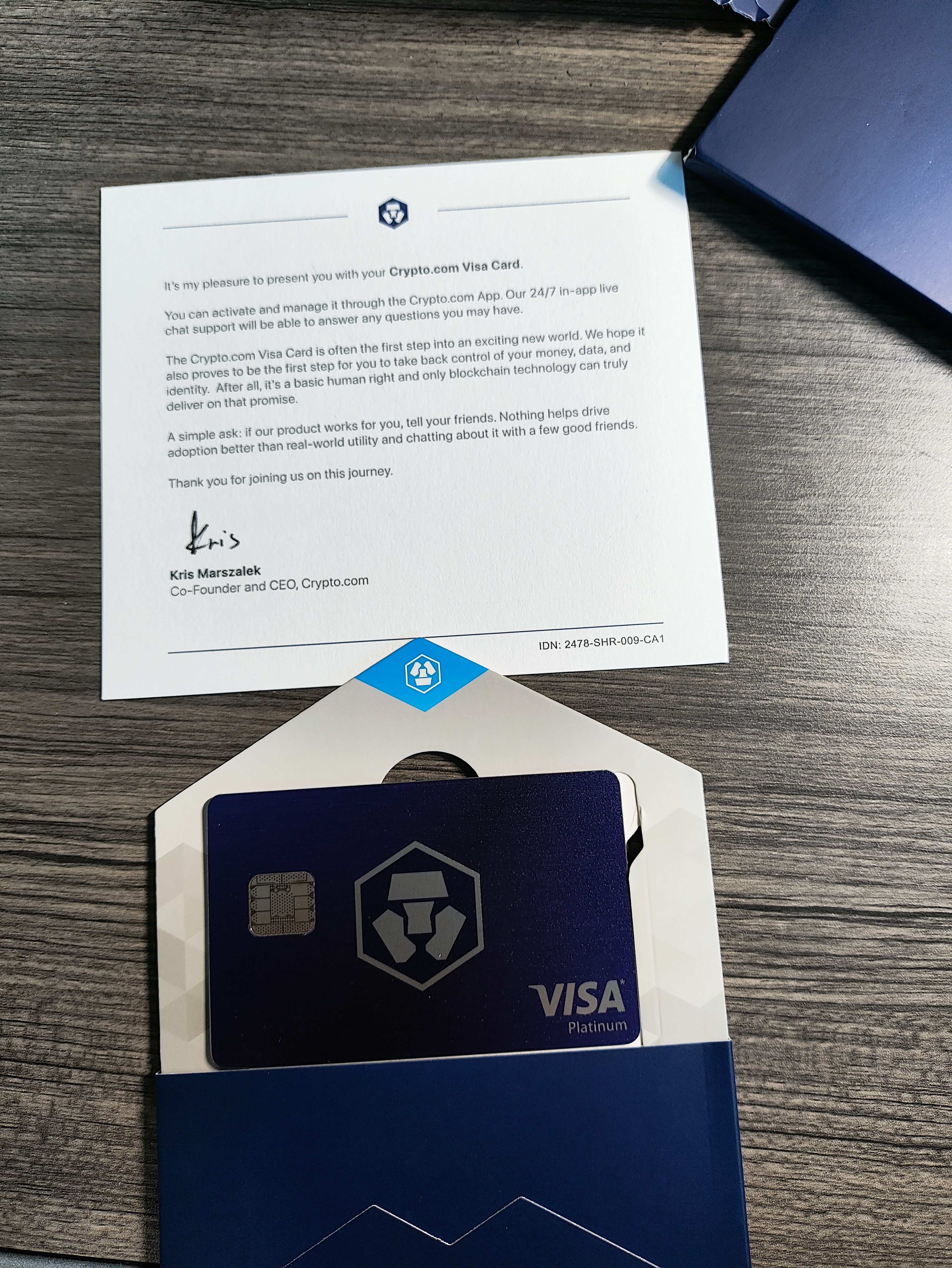
Crypto.com looked safe. It was one of the few registered exchanges in Canada (Binance and OKX had both pulled out), and it had its name on an arena in LA. So I bought 35,768.8 CRO at around US$0.13, staked $6,500 worth, and applied for the Indigo card.
Getting it wasn't easy. I mistyped my address on the application, and there was no way to change it in the app (or at least not on Android at the time). It took several rounds with support to fix. Then came address verification: they wanted a utility bill. My lease wasn't accepted. A utility bill from my roommate, who paid the utilities, was rejected because it wasn't in my name. Only after I finally got a bill with my own name on it did the card ship.
But once it arrived, it felt great. Among friends carrying ordinary debit and credit cards, I had a metal crypto Visa. Crypto.com also gave me about $100 in sign-up rewards, which I cashed out immediately. And CRO kept climbing, step by step. I was convinced I was a gifted investor and a pioneer.
The Peak: $20K Overnight
On August 27, 2025, I opened the app as part of my morning routine and saw my balance at almost $20,000.
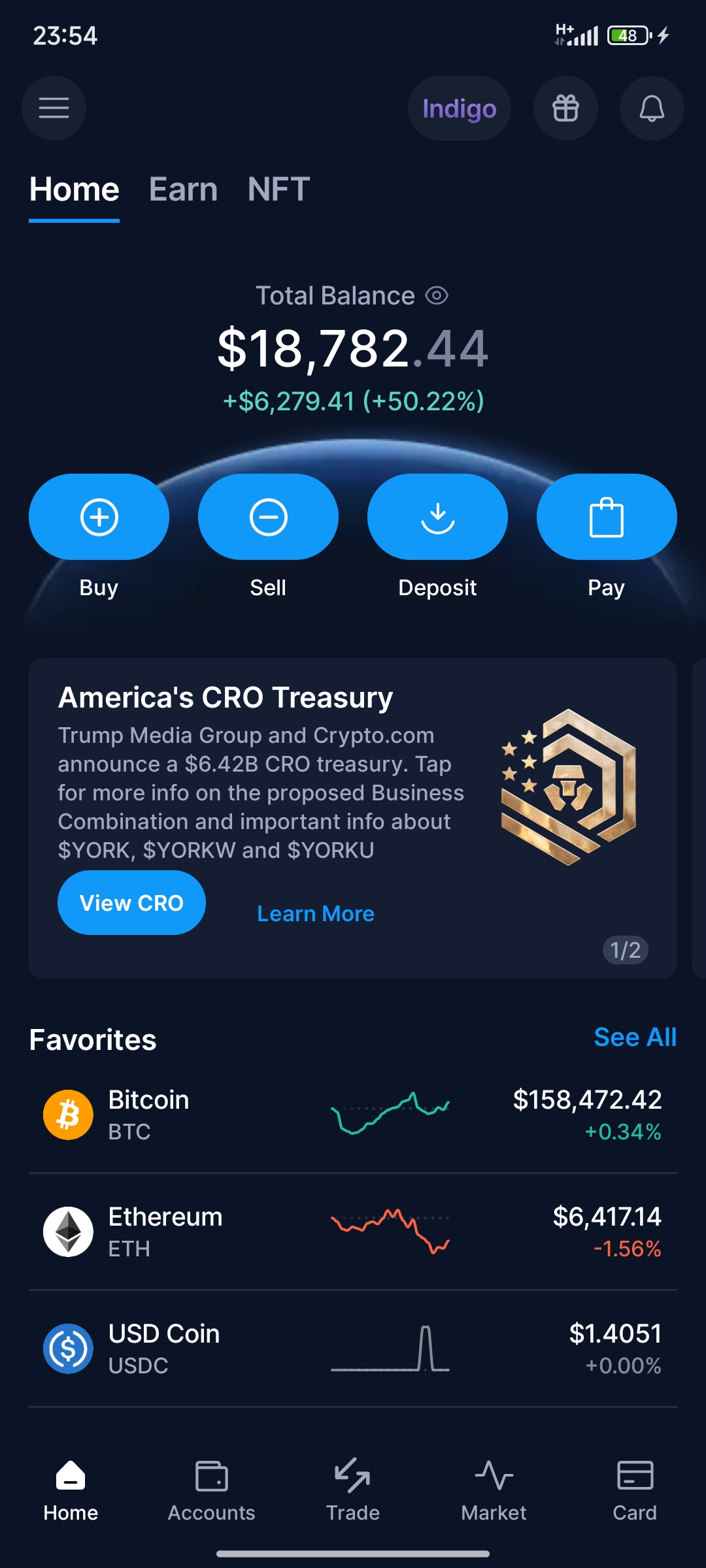
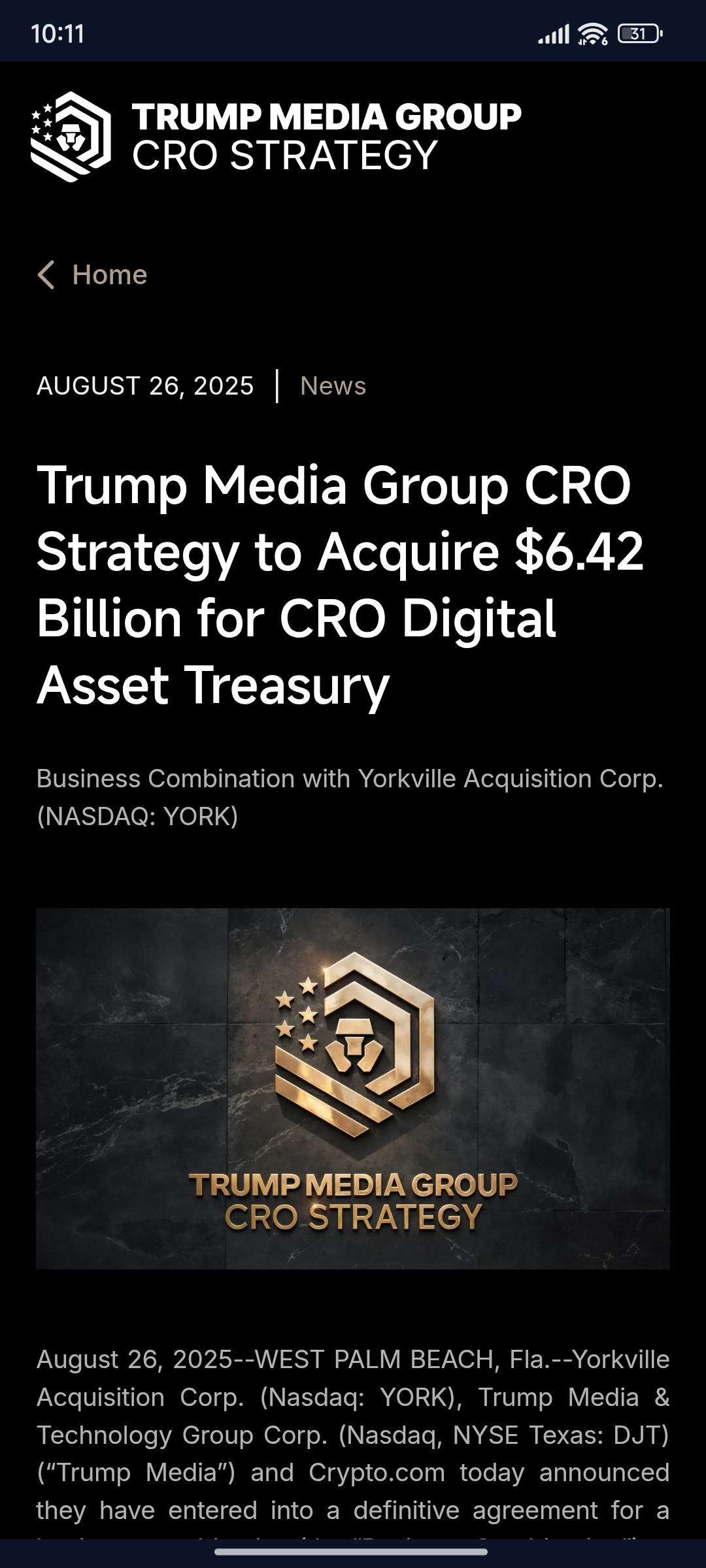
I quickly found the news: The night before, Trump Media and Crypto.com had announced Trump Media Group CRO Strategy: a $6.4 billion treasury that would buy, hold, and stake CRO. CRO spiked as high as US$0.38, up more than 50% in a day, more than double where it had been a week earlier, and its highest price since April 2022. No leverage, just spot holdings, and my stake had roughly tripled.
But the CRO was staked and locked, so there was nothing I could do but stare at it.
Everything was euphoric. Stocks and crypto were both at all-time highs. Meme coins were pumping 1,000% in a day. My position in Bitcoin miner CleanSpark (CLSK) was up 120%. It was full-blown altcoin season. There's an old saying that when the shoeshine boy gives you stock tips, it's time to get out. When everyone around you starts talking about what they're buying, the market is far more dangerous than it looks.
But as a new investor, I wasn't thinking about that. I was thinking about how talented I was.
The Crash: Two Black Swans
Then, predictably, things turned.
October 10, 2025. Trump announced 100% tariffs on Chinese imports. Within hours, over $19 billion in leveraged positions were liquidated, the largest liquidation event in crypto history, and about 1.6 million traders were wiped out. Bitcoin fell from about $122,000 to $104,000. CRO went from US$0.19414 to US$0.14785.
My first instinct was to buy the dip. I tried to move money in through Crypto.com and noticed something I'd ignored for months. As a card holder I supposedly paid zero trading fees, but the app's buy price was 7.5% above the sell price. On a $500 purchase, that was about $37.50 gone before the trade even settled. The fee was zero. The cost was not.
So I looked for a cheaper route. Sending Bitcoin directly would have cost 0.0008 BTC, about US$85 at the time, and USDC over Ethereum mainnet was 20 USDC. Instead, I bought USDC on Crypto.com, withdrew it over Arbitrum for about 2 USDC, and deposited it to OKX.
That's when I learned why the plumbing matters. Regulated North American platforms run on USDC, a large share of offshore and Asian volume runs on USDT, and Layer 2 networks like Arbitrum and Optimism make moving either one much cheaper than Ethereum or Bitcoin mainnet.
November 2025. The second leg down was slower but worse. The Fed signalled no December rate cut, Bitcoin ETFs saw nearly $3.8 billion in outflows, and Bitcoin broke below $100,000 on November 7. By November 21 it touched $80,000, down 36% from its October peak. More than $1 trillion of crypto market value disappeared in about six weeks.
Two black swans, back to back. By the end of November, my stake was down to about $5,000, already below the $6,500 I'd put in. My TFSA went from $5,000 up to $4,000 down.
I stopped opening my brokerage and crypto apps for weeks. I wished I'd never started. I stopped talking about stocks around other people. The talented trader was forever gone.
The Last Twist
Fortunately, markets tend to revert to the mean, given time. My stock portfolio has since recovered most of its losses. CRO didn't.
In August 2026, Trump Media, Crypto.com, and their partner quietly abandoned the CRO treasury, citing "prevailing market conditions and shifting business and stakeholder priorities." The headline that tripled my stake was gone in a single press release, and CRO fell to about US$0.04.
Today, CRO sits around US$0.067, and my stake is worth about $3,400. Even after adding back the roughly $500 in cashback and card rewards I collected, I'm down about $2,600. That's more than a year of the Amex Black Card's $2,500 fee, except the Black Card at least comes with the status...
So I decided to cut my losses and unstake.
The Cost of Centralization: A 36-Day Lock-Up
That's when I hit the final wall: a 36-day unbonding period.
Lock-ups like this come from Proof-of-Stake design. On a PoS chain like Cronos, delegated tokens have to "unbond" before they can move, which prevents validators from exiting all at once and destabilizing the network. Here's the catch: my CRO was staked inside Crypto.com's custodial app, not delegated on-chain by me. The lock-up borrows the logic of the protocol, but the platform sets and enforces the rule. I didn't hold the keys, so I didn't set the terms.
That's what this whole story comes back to. Crypto.com issued the token, set the spread, ran the card program, held my assets, and decided when I could leave. Every part of the "free" card had a cost; I just didn't see who was collecting it.
What I Actually Learned
Trying new things is a good instinct. Doing it without enough research is not. This was a brutal, expensive crash course in custody, cross-chain transfers, and the realities of tokenomics.
More importantly, my mindset stabilized:
- Never be too optimistic. Set rules for taking profits and cutting losses before you need them, and follow them.
- "Zero fees" is not zero cost. Spreads, lock-ups, and liquidity all have a price.
- Not your keys, not your terms. On a centralized platform, someone else decides when you can leave.
- Euphoria is a warning sign. When everyone is a genius, nobody is.
I've let go of the illusion that I can outsmart Wall Street with quick flips. My strategy today is boring but robust: DCA (dollar-cost averaging) into broad index ETFs like the Nasdaq-100. My goal shifted from getting rich quickly to preserving capital and building steady cash flow.
As I write this, I'm on the third day of 36. When the CRO unlocks, I'm selling all of it. The metal card is staying in a drawer as a $2,600 souvenir.